
Roman Augury & Auspices (Disciplína Auguralis)
Augury was not fortune-telling; it was an institutional constitutional veto power. It gave the Roman Republic a formal ritual circuit-breaker to halt political or military momentum.
Core Symbolic & State Mechanism
An augur climbed an elevated sanctuary (*Auguraculum*), drew a sacred celestial boundary in the sky (*templum*) using a curved wooden wand (*lituus*), and divided the horizon into four quadrants. The flight directions, screech pitch, and feeding ravenousness of sacred chickens (*tripudium*) decided whether gods approved civic elections, senate bills, or military offensives.
Stochastic Randomization Algorithm
Spatial quadrant trajectory mapping of wild avian encounters (*ex avibus*) and atmospheric lightning flashes (*ex caelo*) scored as positive (*dextra*) or negative (*sinistra*).
Key Historical Treatises & Artifacts
- Auguraculum Site on the Capitoline Hill (Rome)
- Bronze Lituus Staff Specimens (Villa Giulia, Rome)
- Cicero's De Divinatione (44 BCE)
Primary Archaeological Artifacts & Facsimiles
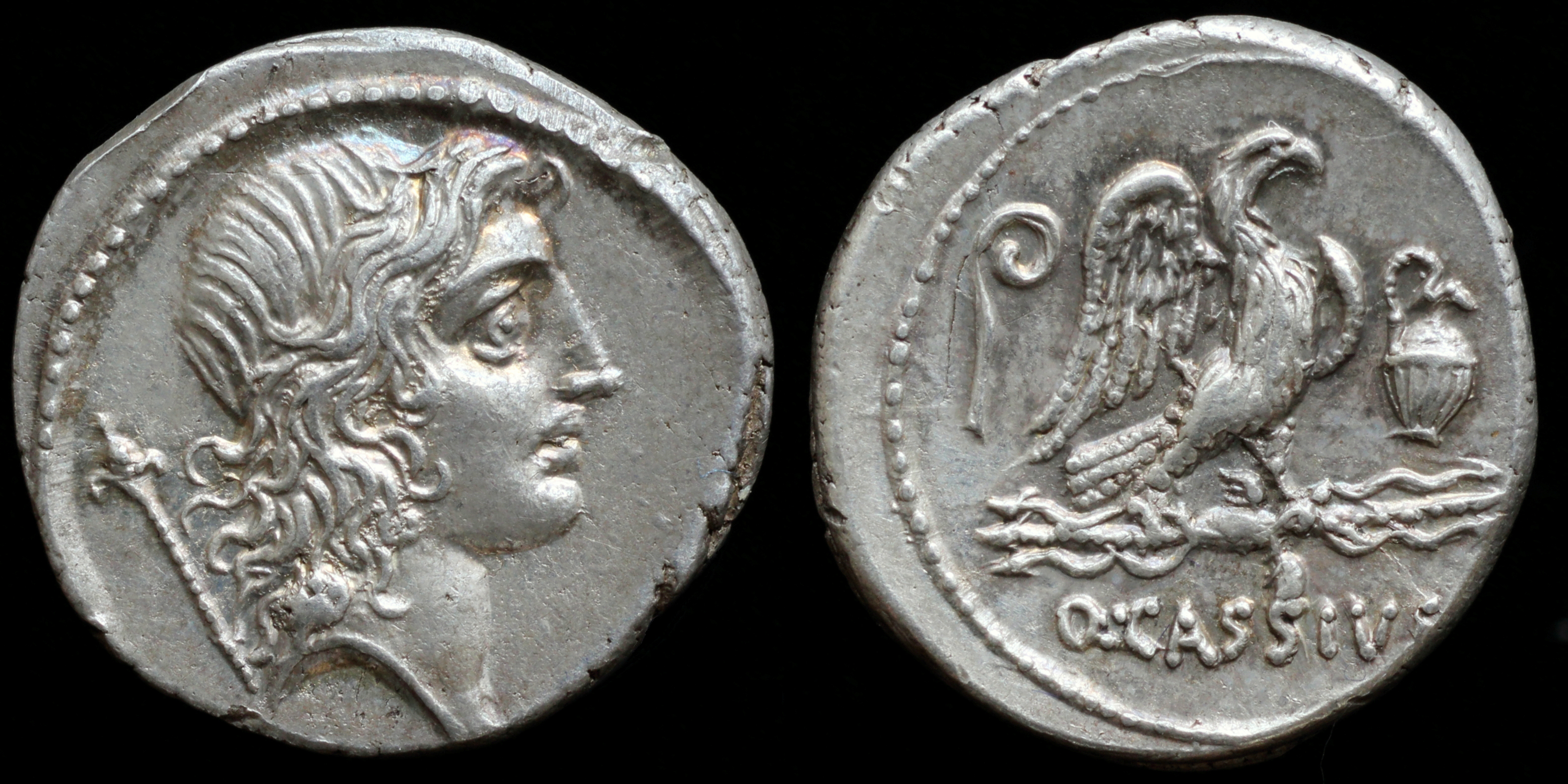
Roman Republican Silver Denarius Depicting Augur's Lituus
Coinage of Sextus Pompeius Showing Auspices Instruments
Silver denarius featuring the curved ceremonial staff (*lituus*) used by Roman augurs to quarter the sky into four sacred quadrants (*templum*), alongside the sacrificial jug (*guttus*).
Primary numismatic visual record of the essential ritual instrument used by the College of Augurs to demarcate space and interpret avian omens before all senate votes and consular elections.
Celestial Ephemeris & Astronomical Timing: Roman auspices and sky-quadrant templum readings were strictly gated by lunar calendar Kalends, Nones, and Ides.