Elder Futhark Runes (Rúnatal)
Language as sacred carving: each glyph is simultaneously a phonetic letter, a natural archetype (Fehu = cattle/wealth, Uruz = aurochs/primal power, Thurisaz = thorn/giant), and a cosmic force.
Core Symbolic & State Mechanism
24 angular graphemes carved onto wood chips, bone slivers, or river stones. Cast onto a clean linen cloth (as described by Roman historian Tacitus in *Germania*, c. 98 CE) and picked while invoking celestial deities to illuminate fate (*Wyrd*) and past action (*Ørlög*).
Stochastic Randomization Algorithm
Discrete token selection from a closed set of 24, with orientation qualifiers (upright vs. merkstave/reversed) and relative spatial proximities on the cloth matrix.
Key Historical Treatises & Artifacts
- Kylver Stone (Gotland, Sweden, c. 400 CE)
- Golden Horns of Gallehus (Denmark, c. 400 CE)
- Vadstena Bracteate (Sweden, c. 500 CE)
Primary Archaeological Artifacts & Facsimiles
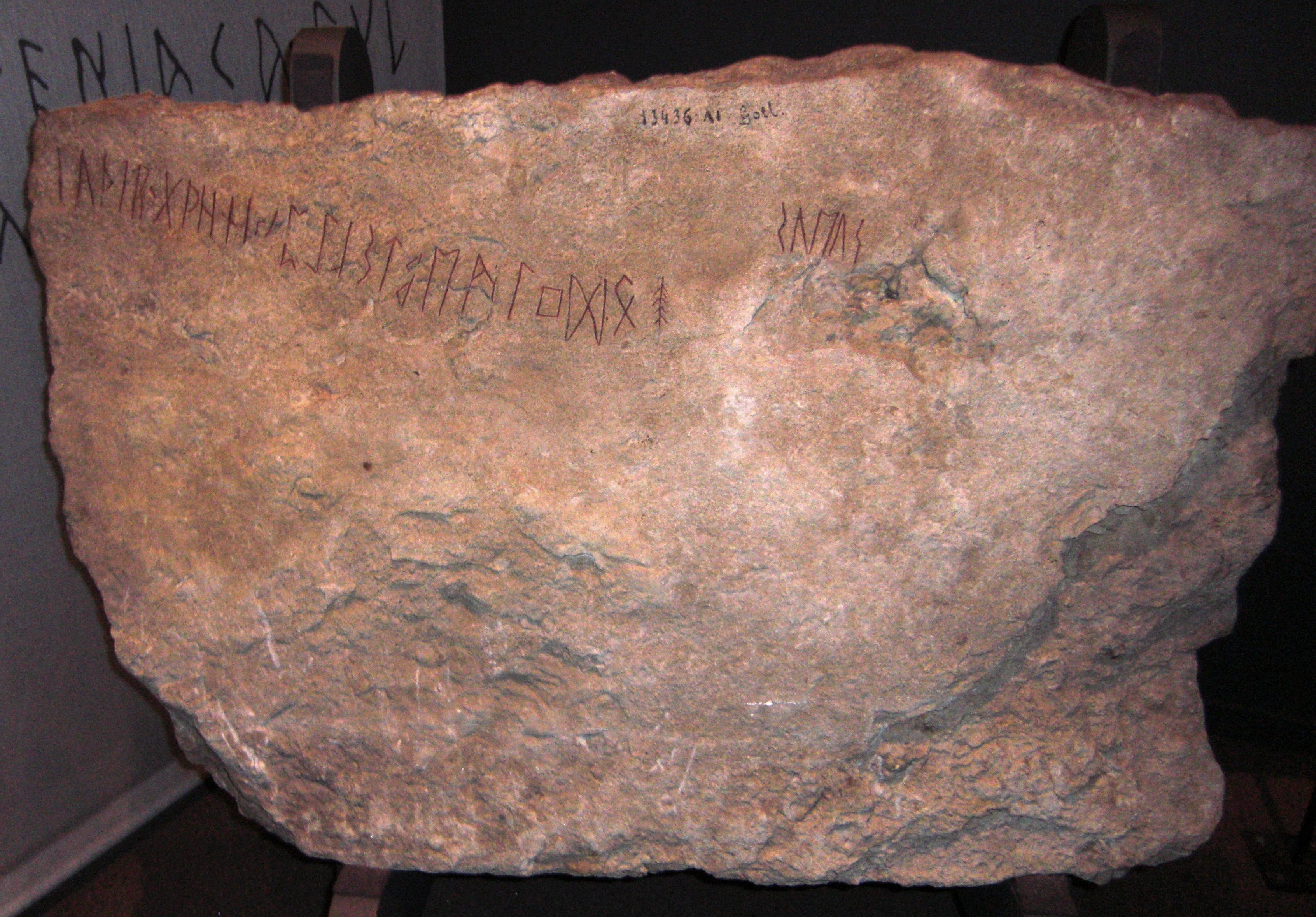
The Kylver Runestone (G 88)
Earliest Complete Sequential 24-Rune Elder Futhark Inscription
Limestone burial chamber slab bearing the earliest known complete listing of all 24 characters of the Elder Futhark in canonical order (ᚠ ᚢ ᚦ ᚨ ᚱ ᚲ ᚷ ᚹ ...), ending with the protective palmette bind-rune.
Definitive linguistic artifact establishing the 24-character phonemic and symbolic sequence used for epigraphic inscription, apotropaic warding, and mantic lot-casting across Germanic Europe.
Celestial Ephemeris & Astronomical Timing: Rune casting was synchronized with the New Moon and Full Moon assemblies (Thing) under sacred celestial alignments.