
Mesopotamian Extispicy & Haruspicy (Bārûtu)
Haruspicy represented humanity's earliest systematic empirical taxonomy: using anatomical clay models (e.g., the British Museum Babylonian Liver) as pedagogical and diagnostic computing tablets.
Core Symbolic & State Mechanism
The *barû* priest-scribes sacrificed a sacred lamb, systematically inspecting the liver (*hepar*), lungs, and gall bladder zone-by-zone. Micro-anomalies—discolorations, extra lobes, pustules, fissure depths—were looked up in massive cuneiform compendia (*Bārûtu*) spanning 100+ tablets.
Stochastic Randomization Algorithm
Biological morphogenetic variance matched against an indexed, deterministic taxonomic database of cuneiform omen clauses: 'If the Finger of the Liver is curved right: the king's army will prevail.'
Key Historical Treatises & Artifacts
- British Museum Babylonian Cuneiform Clay Liver Model (BM ME 92668, c. 1800 BCE)
- Ashurbanipal Royal Library Bārûtu Tablets (Nineveh)
- Etruscan Bronze Liver of Piacenza (c. 150 BCE)
Primary Archaeological Artifacts & Facsimiles
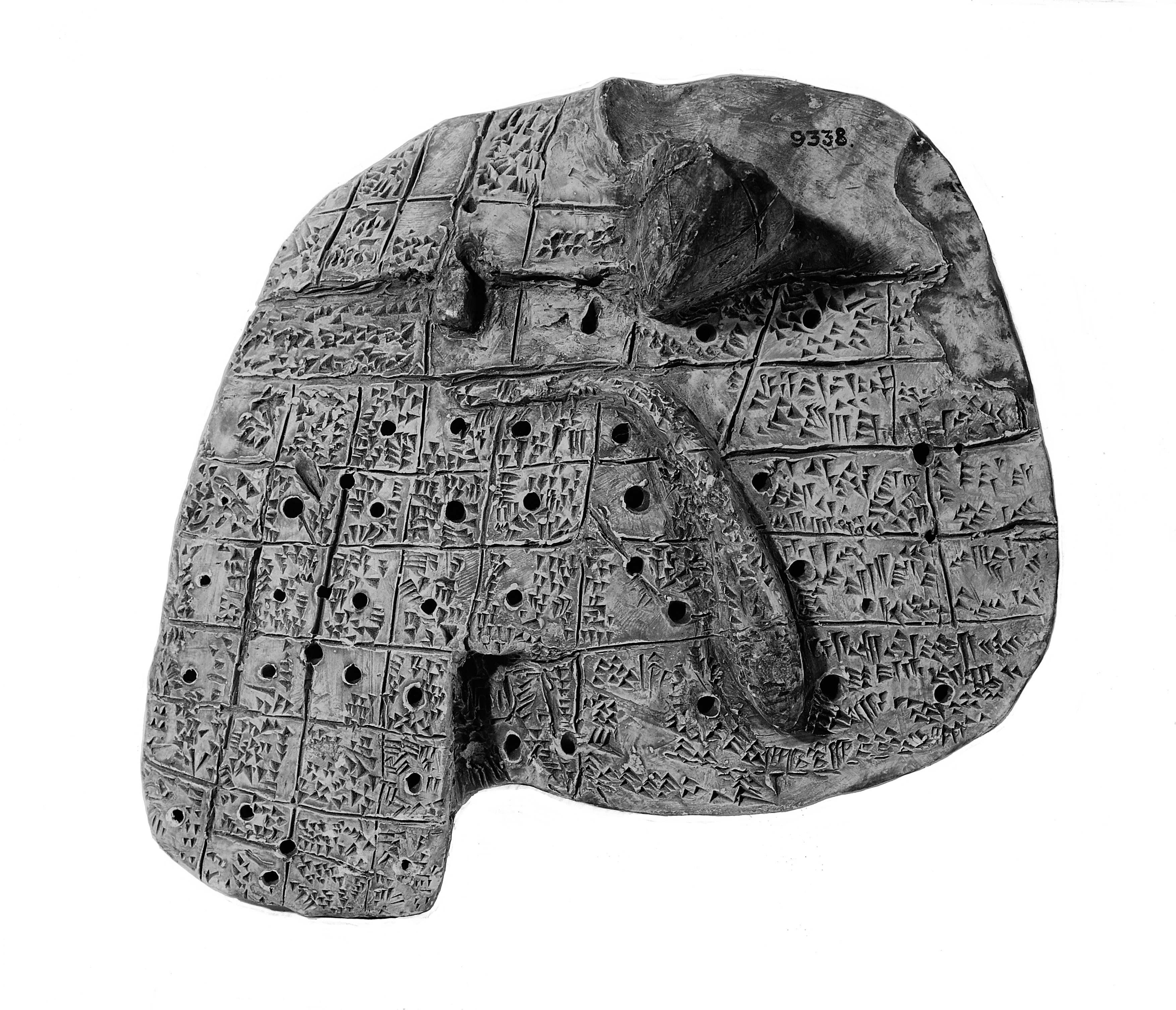
Old Babylonian Inscribed Clay Sheep's Liver Model
Cuneiform Haruspicy Anatomical Training Instrument
Clay model of a sacrificial sheep's liver divided into 55 geometric grid sectors, each inscribed with specific cuneiform omens correlating gallbladder pustules, cystic duct fissures, and lobe anomalies with military fortunes.
The anatomical centerpiece of Mesopotamian extispicy (*bārûtu*). Priests (*bārû*) used these clay facsimiles to teach apprentice diviners how to decode divine messages inscribed by the sun god Shamash upon the entrails of sacrificial animals.
The Clay Liver of Babylon Diagnostic Matrix
Finger of the Liver (Lobus Caudatus / Processus Pyramidalis)
Upper central apex of the caudate lobe.
Observed Anatomical Condition (Protasis):
“If the Finger is bent toward the right and the tip is split like a serpent's tongue:”
Cuneiform Royal Prognostication (Apodosis):
The enemy prince will make peace by sending his eldest son as hostage. The King of Akkad will expand his borders to the Upper Sea.
Historical & Political Function:
The Finger represented the primary commanding sovereign or military commander in the field.
Celestial Ephemeris & Astronomical Timing: Mesopotamian bārû priests performed sacrificial liver inspections exclusively at auspicious lunar phases under the night sky.