
I Ching (Yijing · The Book of Changes)
The universe is not static matter, but ceaseless energetic polarity and transformation (Yin/Yang). Anticipated Leibniz's 1703 binary arithmetic and Jungian synchronicity.
Core Symbolic & State Mechanism
50 yarrow stalks (or 3 bronze coins) are manipulated through an arithmetic sieve to yield values 6 (old Yin), 7 (young Yang), 8 (young Yin), or 9 (old Yang). These construct a 6-line hexagram. Old lines mutate into their opposites, producing a dynamic second hexagram that reveals the vector of transformation.
Stochastic Randomization Algorithm
Non-uniform stochastic distribution via 49-stalk sorting (probability of 6 = 1/16, 7 = 5/16, 8 = 7/16, 9 = 3/16) generating state transitions between $2^6 = 64$ discrete states.
Key Historical Treatises & Artifacts
- Mawangdui Silk Manuscripts (c. 168 BCE)
- Shanghai Museum Bamboo Slips (Zhouyi fragments)
- King Wen & Duke of Zhou Commentaries
Primary Archaeological Artifacts & Facsimiles
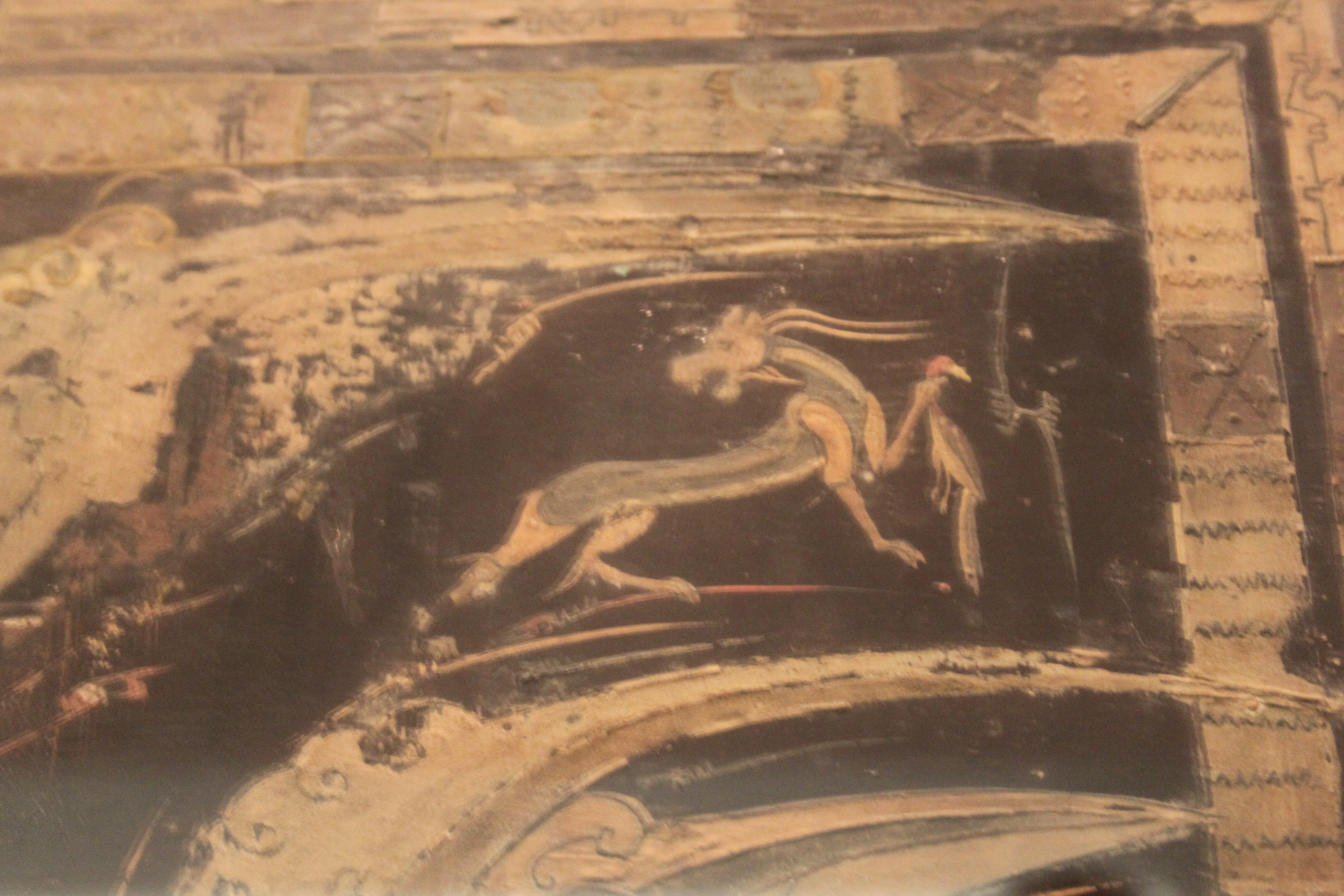
Mawangdui Silk Manuscript of the I Ching (Zhouyi)
Early Han Dynasty Silk Scroll with Alternative Hexagram Ordering
Well-preserved Han dynasty silk scroll containing the complete 64 hexagrams and commentary texts, arranged in a systematic 8-palace structural order preceding the received King Wen sequence.
Archaeological watershed confirming the antiquity and textual stability of the *Book of Changes*, while revealing early cosmological matrix groupings based on trigram pairing.
Celestial Ephemeris & Astronomical Timing: The 64 hexagrams map directly to the 8 lunar phases and the monthly wax/wane cycle of Yin and Yang polarity.