Humans have repeatedly created symbolic systems for interpreting uncertainty, meaning, pattern, and possibility.
Divinologium explores historical, cultural, mathematical, and combinatorial traditions with intellectual rigor—without presenting divination as deterministic prediction. A sanctuary of archetypal geometry and cognitive defamiliarization.

The Arcana Graph: The Tower Nexus
Not isolated symbols, but an interconnected associative web. Trace how The Tower (XVI) connects to Mars, Hebrew Pe (פ), sudden deconstruction, and historical woodcuts of Marseille.

The Tower (XVI)
Major Arcana XVI: Sudden revelation through structural deconstruction.
Active Graph Edges (11)
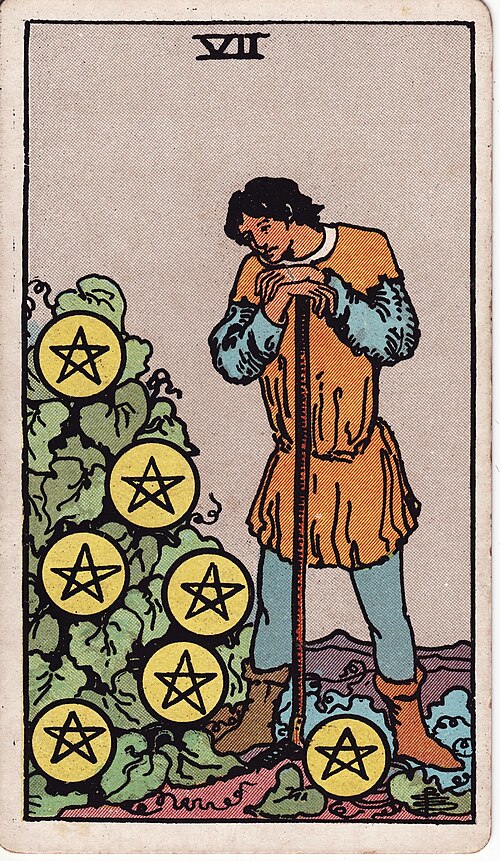
The 78-Card Archetypal Catalog
The complete 1909 Rider-Waite-Smith museum deck with deep Qabalistic, alchemical, and iconographical exegeses.


The Spread Lab: Non-Deterministic Diagnostics
Experience virtual Fisher-Yates deck shuffling and deal into the signature Axis Mundi Reticle, Celtic Cross, Three-Card Horizon, or the Pythagorean Tetraktys. Computes real-time Elemental Dignities (% Fire, Water, Air, Earth) and synthesizes structural tensions without fortune-telling clichés.
The 360° Symbolic Astrolabe Wheel
Non-discursive knowing and threshold perception. The capacity to inhabit ambiguity and wait for emergent patterns to clarify without forcing premature closure.
Divination Systems Across History
From Shang oracle bones to Mesopotamian haruspicy, Ifá 256 Odù, and I Ching binary combinatorial hexagrams.
The Tarot Corpus
Divination not as deterministic foresight, but as structured cognitive defamiliarization: using associative archetypes to illuminate subconscious heuristics and systemic blind spots.
Shang Oracle Bones (Jiaguwen)
The birth of Chinese literacy was inextricably intertwined with mantic technology: the inscriptions on these bones (*Jiaguwen*) form the ancestral root of all East Asian character writing.
Mesopotamian Extispicy & Haruspicy (Bārûtu)
Haruspicy represented humanity's earliest systematic empirical taxonomy: using anatomical clay models (e.g., the British Museum Babylonian Liver) as pedagogical and diagnostic computing tablets.
The Delphic Oracle (Pythian Channeling)
Delphi operated as the ancient Mediterranean's premier supreme court and strategic risk consulting firm, utilizing deliberate poetic ambiguity to force political actors to shoulder the cognitive burden of decision.
Scholarly Monographs & Epistemology
Curatorial treatises exploring non-deterministic state machines, chromatic arcana, and cognitive defamiliarization.
The Architecture of Uncertainty: Combinatorial Algorithms and Stochastic Hermeneutics
When human cognition encounters irreducible uncertainty, it consistently invents combinatorial symbolic engines. By mapping continuous emotional anxiety onto finite discrete topologies (such as 78 Tarot archetypes, 64 I Ching hexagrams, or 16 geomantic tetragrams), mantic rituals do not foresee deterministic futures; rather, they introduce controlled stochastic noise into executive thinking, breaking cognitive fixation and stimulating lateral problem-solving.
The Non-Deterministic Mind: Divination as Radical Cognitive Recontextualization
Divination becomes intellectually richer precisely when we abandon deterministic fortune-telling. By analyzing symbolic cartomancy through cognitive psychology, phenomenology, and narrative theory, this monograph demonstrates how archetypal symbols act as structured defamiliarization devices, enabling human minds to navigate high-stakes dilemmas without dogmatic rigidity.
Chromatic Arcana: The Semiotics of Color in Marseille Woodblocks and Smith Gouache
Color in the Tarot is never decorative; it is an analytical code. This treatise examines how historical ink pigments, stencil constraints in Lyon and Marseille, the Golden Dawn's Four Color Scales, and Pamela Colman Smith's synesthetic palette constructed an intricate optical language of esoteric meaning.